One quiet sensor. Awareness in every room.
Stillsense is a complete ambient-sensing system — a small sensor, on-device intelligence, and a calm dashboard — that turns the Wi-Fi a building already has into real-time presence, movement, and fall detection. No cameras. No wearables. No room left watching.
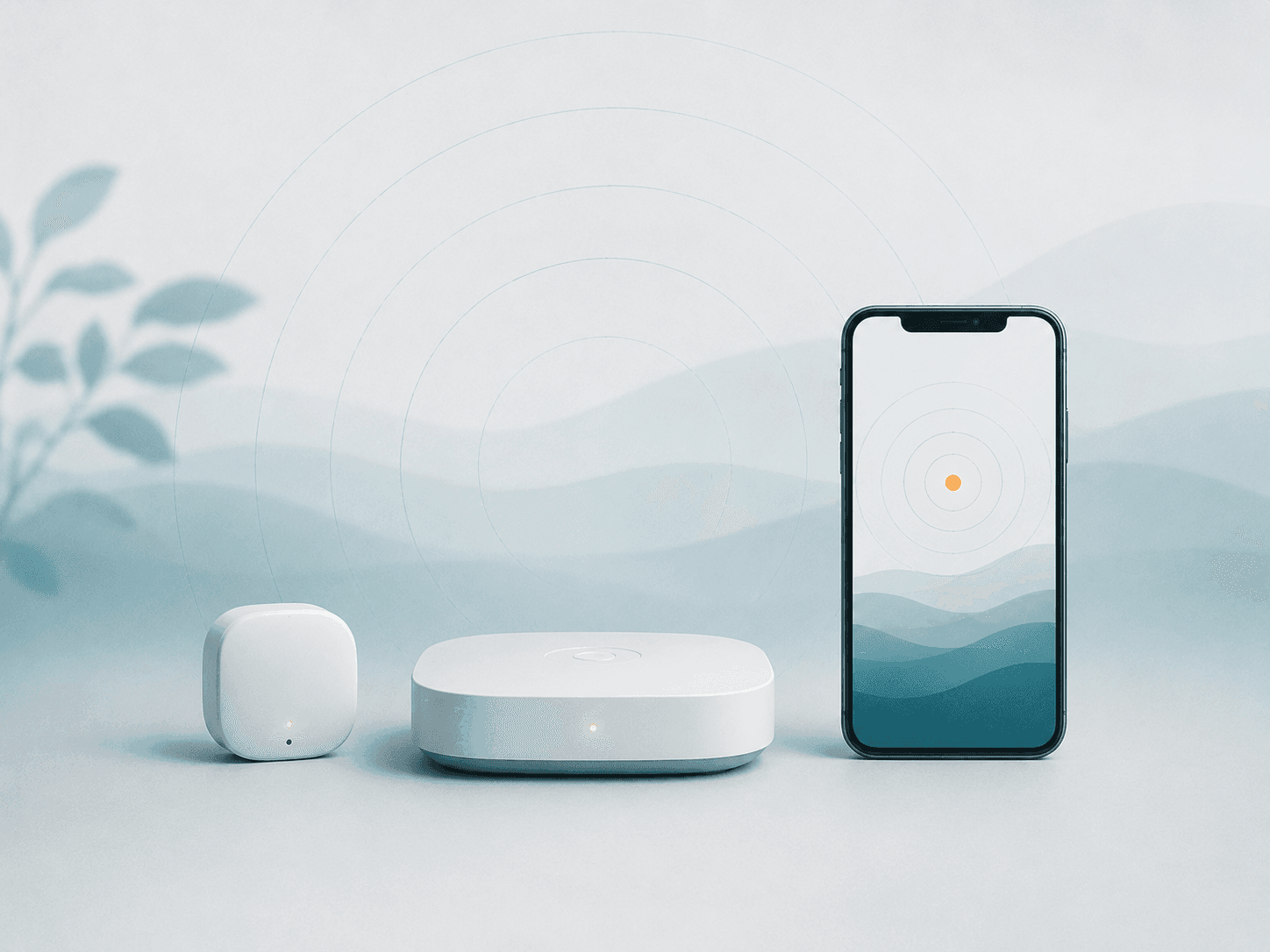
Three quiet parts, working as one.
A small sensor, on-device intelligence, and a calm dashboard — riding on the Wi-Fi already in the building.
The sensor.
A small, unobtrusive Stillsense sensor reads the fine detail of the Wi-Fi signal in the space. One sensor covers a room; a few cover a whole home. It mounts in minutes and needs no camera, no line of sight, and no wiring beyond power.
On-device intelligence.
All sensing and interpretation happen on a local Stillsense device in the building — at the edge. It recognises presence, movement, and falls, and learns the ordinary rhythm of the space, and the raw signal never leaves the room. Interpreted events stay on-premises, or sync to Stillsense Cloud (hosted in Norway) if you choose managed hosting.
The dashboard & alerts.
A calm, clear interface for staff or family: live room status, instant alerts when something matters, and a simple history — delivered through the systems you already use.
…and the Wi-Fi you already have.
Stillsense works with standard Wi-Fi, so most of the “hardware” is already in the building. That’s what makes it fast to deploy and a fraction of the cost of camera or radar systems.
Built to notice what matters, and nothing it shouldn’t.
| Capability | Status | What that means |
|---|---|---|
| Presence detection | Available | Knowing whether someone is in a room, reliably and in real time |
| Motion & activity | Available | Recognising movement and the rhythm of a normal day |
| Bed-exit & night activity | Available | Noticing when someone gets up, or has a restless night |
| Fall detection | Available, under independent validation | Detecting likely falls in real time; we’re completing a formal validation study before making any safety-grade guarantee |
| Whole-home coverage | Available, improving | Sensing across rooms from few devices; range depends on the home’s layout |
| Breathing-rate monitoring | Available, under independent validation | Contactless respiration trends during sleep; we’re completing a formal validation study before making any clinical or safety-grade guarantee |
| Heart-rate monitoring | Available, under independent validation | Contactless heart-rate trends; we’re completing a formal validation study before making any clinical or safety-grade guarantee |
Presence detection
AvailableKnowing whether someone is in a room, reliably and in real time
Motion & activity
AvailableRecognising movement and the rhythm of a normal day
Bed-exit & night activity
AvailableNoticing when someone gets up, or has a restless night
Fall detection
Available, under independent validationDetecting likely falls in real time; we’re completing a formal validation study before making any safety-grade guarantee
Whole-home coverage
Available, improvingSensing across rooms from few devices; range depends on the home’s layout
Breathing-rate monitoring
Available, under independent validationContactless respiration trends during sleep; we’re completing a formal validation study before making any clinical or safety-grade guarantee
Heart-rate monitoring
Available, under independent validationContactless heart-rate trends; we’re completing a formal validation study before making any clinical or safety-grade guarantee
We market only what’s in the “Available” rows. Fall detection, breathing-rate, and heart rate ship with independent validation studies in progress before any safety-grade or clinical guarantee.
Calm by default. Clear when it counts.
Most of the time it simply shows that all is well. When something changes, it surfaces a single, plain alert — “Possible fall in the bedroom,” “No movement since 22:40” — to the right person, fast.
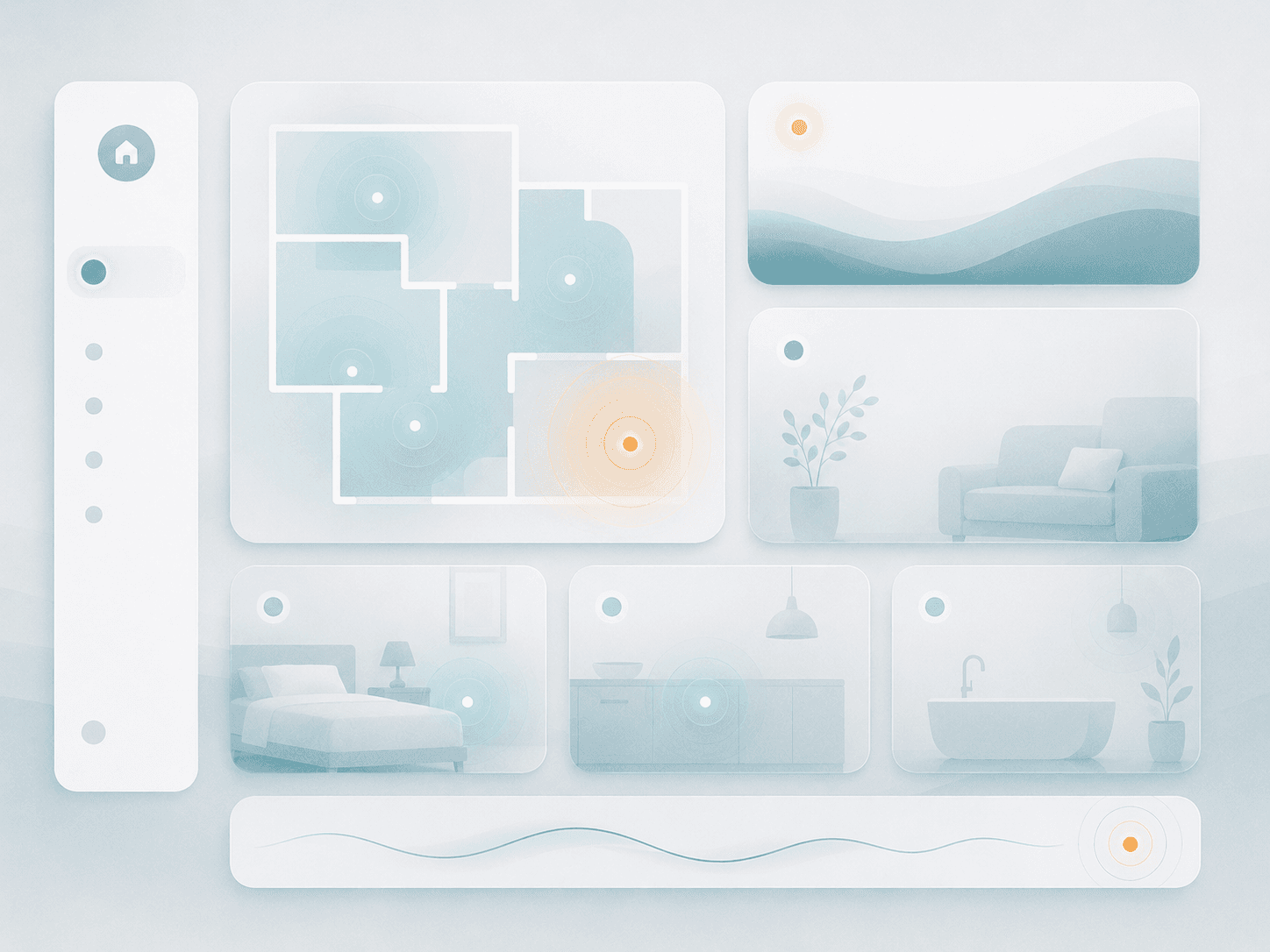
- Live status across rooms, residents, or homes, at a glance
- Instant alerts routed to staff, response centres, or family
- A simple history of events, for handovers and follow-up
- Roles & multi-tenant structure for teams and organisations
- Integrations with response-centre platforms and journal/EPJ systems (via VKP), and with smart-home platforms in the Home edition
- Honest language it tells you what it knows, never what it can’t
Minutes, not a construction project.
Because Stillsense rides on existing Wi-Fi, getting started is quick and clean.
- 1
Place the sensor.
Position one sensor per room, or a few for a whole home. Power it on. No camera to aim, no cabling to run.
- 2
Calibrate.
Stillsense learns the empty space in a short calibration, then begins recognising presence and movement.
- 3
Connect.
Route alerts to the response service, staff app, or family — and into journal/EPJ systems where needed.
No construction, no cameras to position, no per-room wiring. A typical room is live in minutes.
The details, for the people who want them.
Values marked in development are confirmed before publication — we don’t state unverified figures.
- Sensing method
- Wi-Fi Channel State Information (CSI) — no camera, no microphone, no radar required
- Sensor unit
- Compact Wi-Fi sensor node, mains / USB powered · model & dimensions in development
- Processing
- On-device (edge) inference; no cloud dependency required · hardware platform in development
- Connectivity
- Standard Wi-Fi (2.4 / 5 GHz); works with existing access points · Wi-Fi 6/6E nodes optional
- Coverage
- Room-level per sensor; whole-home from a few; through-structure, layout-dependent · range figures in development
- Detection latency
- Real-time event detection · latency figures in development
- Data
- No image or audio created; events processed and stored on-device; encrypted in transit and at rest
- Power
- Mains / USB / PoE · typical draw in development
- Operating conditions
- Indoor · temperature & humidity range in development
- Integrations
- Response-centre platforms; journal/EPJ via VKP; Matter / Home Assistant (Home edition); API & SDK (Core)
- Privacy
- Privacy by design; GDPR / personvern; DPIA-ready; no personal images ever created
- Certifications
- CE planned; additional certifications planned
One platform, configured for where it's used.
The same calm core, set up for care, the home, or the platforms built on top of it. Every edition runs self-hosted or on Stillsense Cloud — our managed, Norway-resident hosting.
Stillsense Care.
For nursing homes and home care: night supervision, bed-exit and fall alerts, response-centre and EPJ integration, and the privacy and procurement foundation municipalities need.
Stillsense for careStillsense Presence (Home).
For the smart, energy-aware home: whole-home presence for lighting, heating, and automations, via Matter and Home Assistant.
Stillsense for the homeStillsense Core.
The sensing engine, licensed to telecom, smart-home, and security platforms.
Partner with usA fraction of the cost of cameras or radar.
Stillsense pairs a small hardware cost with a simple subscription — and because it retrofits onto existing Wi-Fi, total cost lands well below the per-room price of camera- or radar-based supervision. Pricing depends on edition, scale, and integration, and for care services we help structure pilots and funding (including Helseteknologiordningen). Tell us your setting and we’ll put together a quote.
The promise, in one line.
Stillsense creates no image and no audio — only an understanding of movement, kept in the building. And we only sell what we can stand behind: presence, movement, bed-exit, falls, breathing-rate, and heart rate today — with validation in progress where it matters; nothing we can’t prove.
See the system in your own space.
A demo in an ordinary room
The best way to evaluate Stillsense is to watch it sense an ordinary room — quietly, with nothing watching.