The alarm no one wears
The pendant alarm only works if it's worn and the person can press it. Research shows most who fall don't — which is the strongest case for a safety net that needs nothing worn at all.
The alarm no one wears
The pendant alarm has been the default answer to living alone for forty years: press the button, help comes. It is a good idea with a quiet flaw — it only works if the person is wearing it and is able, and willing, to press it.
The button that doesn't get pressed
The research on this is uncomfortable. In studies of older people who use a personal alarm, roughly 80% who then had a fall did not use it to call for help — because it was on the bedside table, in another room, or because after a fall they could not reach or operate it. A "long lie" on the floor — more than an hour — happens to a significant share of fallers, and the outcomes are grim: among those who experience one, around half die within six months.
The problem is rarely the technology. It is human. A pendant is a constant reminder of frailty, so it gets left in a drawer. After a heavy fall, a person may be too hurt, too confused, or too far from the button to use it at all. A safety device that depends on the person being well enough to ask for help is weakest exactly when it is needed most.
Help that doesn't wait to be asked
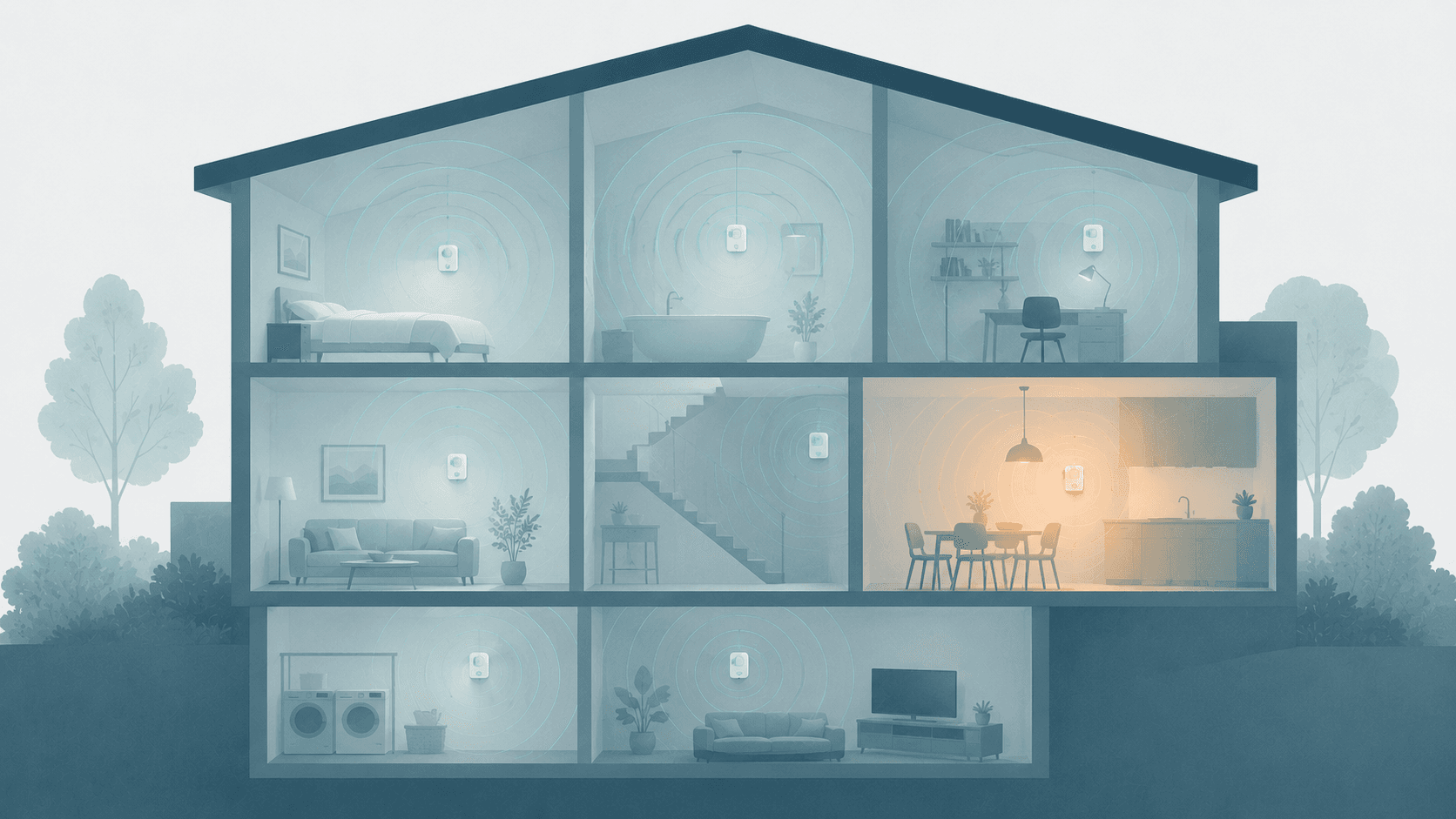
Ambient sensing changes the question from did they press the button to does the home notice something is wrong. There is nothing to wear, nothing to charge, and nothing to remember. Stillsense reads the home's own Wi-Fi to sense presence and bed-exit — so a long absence of normal movement, or someone who got up in the night and never settled back, can prompt a check without anyone lifting a finger.
We are careful here, because this is life-and-death. Fall detection is a capability we are validating independently, never sold as a guarantee. But the deeper point holds regardless: the safest alarm is the one no one has to wear.
The 80% and six-month figures come from published research on personal emergency response systems and "long lie" outcomes, not from Stillsense. Fall detection is under independent validation.